The Green & Circular Metals Expert Forum: What Europe needs to make circularity work
The Green & Circular Metals SIGN Expert Forum brought industry, policymakers, researchers, RTOs, education partners and emerging talent together in Amsterdam to examine what Europe needs to build a more circular, competitive and resilient metals value chain.
Europe has much of the technology and industrial expertise needed to build a more circular metals industry. Discussions at the Green & Circular Metals SIGN Expert Forum focused on the conditions needed to put those strengths to work at scale, from competitive energy and access to secondary materials to regulation, investment and skills.
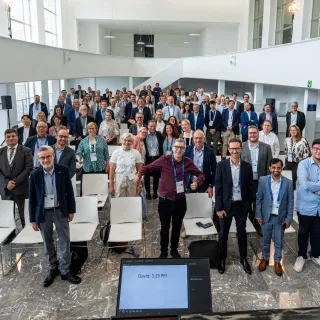
Participants at the Green & Circular Metals SIGN Expert Forum in Amsterdam
The economics of circularity
The opening discussion between EIT RawMaterials CEO and Managing Director Bernd Schäfer and Tata Steel Netherlands CEO Hans van den Berg put the commercial challenge into focus. High energy costs, access to quality scrap and uncertainty over demand for lower-carbon products all affect whether companies can justify the investment needed to change how metals are produced and recovered.
“The challenge is how to get there, how to be able to make the capex, how to have the right cost structure, but also the right price for the product,” van den Berg said.
That tension surfaced again in the discussion on recycling. Recyclers need confidence that customers will buy their output before investing in new capacity, while manufacturers want certainty over volume, quality and price before committing to recycled materials. Closing that gap will be critical to building stronger markets for secondary materials in Europe.
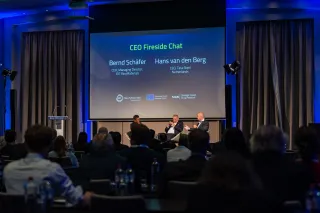
Bernd Schäfer, CEO and Managing Director EIT Rawmaterials and Hans van den Berg, CEO, Tata Steel Netherlands during their fireside chat
A single market for secondary materials
The forthcoming EU Circular Economy Act could help address some of these barriers. Aurel Ciobanu-Dordea, Director at DG Environment, European Commission, gave participants an insight into the direction of the legislation, including plans to improve the supply and quality of secondary raw materials and make it easier for them to move across the Single Market.
One priority is addressing differences in how Member States determine when waste becomes a secondary raw material, which can make moving materials between European countries unnecessarily difficult.
The discussion also connected the Circular Economy Act with a wider issue raised throughout the Forum: Europe already has valuable materials circulating within its economy. Keeping more of them in productive use, and allowing them to move to where they can be recovered most effectively, could help strengthen resilience and reduce dependence on primary imports.
Circularity in practice
Industry examples showed what that can look like in practice.
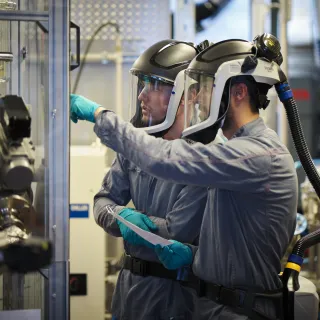
Circular Materials presented its approach to recovering nickel, chromium and copper from industrial wastewater, producing secondary raw materials alongside clean water.
Outokumpu shared how it has reached 97% recycled material content in its stainless-steel production, which it says enables a 75% lower carbon footprint compared with the global average. It is also exploring low-emission raw materials, greater use of by-products and carbon looping as further routes to decarbonisation.
These examples reflected a broader theme running through the Forum, with materials traditionally considered waste or by-products increasingly becoming valuable resources where the technology, economics and regulatory conditions support their recovery.
Participants explored those opportunities further through four World Café sessions focused on carbon valorisation, cross-sector metal recovery, critical raw materials from e-waste, and the skills and education needed for the future.
Bringing the next generation into the challenge
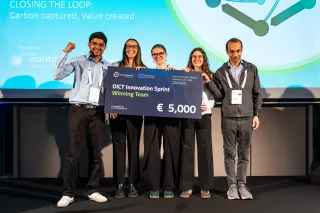
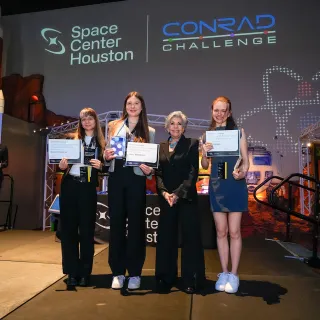
Winning Team of the OICT Innovation Sprint during the Green & Circular Metals Expert Forum
Skills were also in focus throughout the Forum. EIT RawMaterials presented analysis identifying more than 350 distinct skills gaps across the raw and advanced materials sectors, while 81% of surveyed organisations reported difficulties recruiting skilled workers.
The Open Innovation Challenge for Talent: SIGNs Sprint brought emerging talent directly into the Forum. Thirty participants formed six multidisciplinary teams to develop and pitch solutions to real industry challenges in decarbonisation, resource efficiency and circular metals.
RevivaMat took the top spot with its proposal to turn steelmaking CO₂ and industrial waste streams into valuable products. All 30 participants also had the opportunity to connect with industry representatives and other Forum participants.
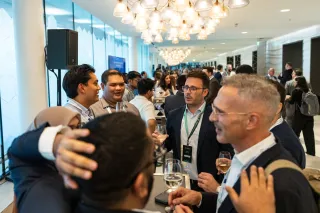
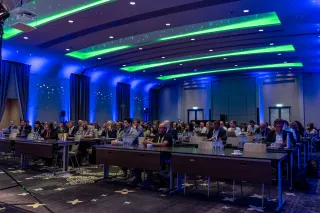
Participants during the break at the Green & Circular Metals Expert Forum in Amsterdam
Taking the work forward
The work continues through the Green & Circular Metals SIGN, with active working groups on CO₂ Footprint, Skills, By-Product Valorisation and WEEE, giving partners a way to take forward the issues and opportunities raised in Amsterdam.
By bringing together expertise from across the value chain, the SIGN provides a space to work collectively on the practical barriers to a more circular and competitive European metals industry.
Interested in contributing? Sign up for the Green & Circular Metals SIGN working group via SIGNS@eitrawmaterials.eu.