Op-Ed by Inge Hofkens, COO Multimetal Recycling, Aurubis
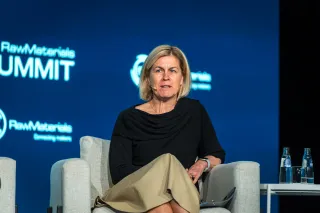
Inge Hofkens at the EIT RawMaterials Summit 2026
Aurubis has been active in metallurgical processing—both primary and secondary—for 160 years. That history shapes how we think about circularity. In many ways, circularity is embedded in the DNA of metallurgical processing by default. In any metallurgical process, we do not like losing metal in any form or through any side stream, because every unit represents value. It is also a matter of metallurgical pride: the drive to recover every possible unit and ensure that valuable materials remain in the system. The same thinking applies beyond metals themselves.
Materials such as iron silicates and other non-metal by-products can also hold value and, wherever possible, should find their way back into the value chain.
Inge Hofkens, COO Multimetal Recycling, Aurubis
Every unit matters
Europe is a net metal importer. Once metal arrives here, however, it should remain in the value chain. Instead, valuable material continues to leak out of Europe. This is largely a problem of our own making. Every major region in the world has some form of regulation designed to retain scrap, waste, or recycled materials within its borders. Whether it is an export ban, a restriction, a quota, or an import measure, there is usually a mechanism in place. Except for Europe.
The result is that the world-class recycling and recovery infrastructures Europe has built risk becoming redundant, because the material it needs is floating out. Processing capacity elsewhere in the world continues to attract material flows in that direction. In the copper sector, smelters are now paying to secure concentrate supply. That dynamic is also pulling secondary materials into the same flows. Unless action is taken, the leakage will continue.
Five changes are necessary
First, energy costs remain the single biggest challenge. Every recycling operation, every recovery process, and every metallurgical activity requires energy. Although energy prices have become less prominent in public debate, they remain one of the most significant constraints on competitiveness. The combination of Europe's merit-order pricing system and the absence of a genuine Energy Union continues to create a structural disadvantage.
Second, Europe needs a true single market for material flows. Whether materials are classified as waste, secondary raw materials, or recycled products, the rules governing their movement must be harmonised and simplified. In a continent of small, highly integrated industrial regions, materials must be able to travel easily and quickly.
Third, permitting must become faster and more fit for purpose. Projects succeed or fail at the local level.
Fourth, trade measures should be seriously considered. Outright bans and restrictions may not be the right instrument, but duties could be a very effective alternative. Beyond subsidies, fiscal instruments deserve more attention. Tax credits and tax benefits for circularity and recovery activities could do more, because ultimately, the business case must hold without subsidies.
Lastly, Europe also needs the talent to make circularity work. Metallurgists, materials scientists, process engineers, and data specialists will all play a critical role in developing and scaling the technologies needed for the next generation of recovery processes.
Closing the loop
The shift toward circularity thinking and the recognition of the value embedded in recovered materials is real and growing. Within the processing sector, what needs to be done is largely understood. What is needed now is a shared understanding across the full value chain—between OEMs, manufacturers, raw material processors, and consumers—of where value can actually be captured and how it can best be shared.
Inge Hofkens, COO Multimetal Recycling, Aurubis
Europe has the processing capability, the sustainability credentials, and the industrial base. The remaining pieces are policy coherence, competitive energy prices, and a regulatory framework that keeps valuable materials in Europe, attracts more of them, and makes circular business models work.
Inge Hofkens is COO of Multimetal Recycling at Aurubis. This article is based on her remarks during the panel “Europe’s Other Mine: Circularity as Europe’s Competitive Advantage” at the EIT RawMaterials Summit 2026.
The views expressed in this article are those of the author and do not necessarily reflect the views or position of EIT RawMaterials.