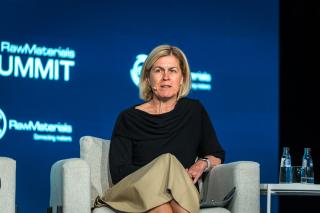
Op-Ed by Allard Castelein, Special Representative for the Raw Materials Strategy, Netherlands Ministry of Economic Affairs
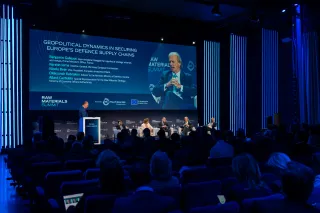
Allard Castelein at the EIT RawMaterials Summit 25, at the opening panel "Geopolitical Dynamics in Securing Europe’s Defence Supply Chains"
At the recent EIT RawMaterials Summit, the theme of the “Race to 2030” captured the urgency of securing Europe’s raw materials supply chains to safeguard security, strategic autonomy, and industrial competitiveness. In the context of Europe’s defence supply chains, however, this race is about far more than just meeting targets - it’s about moving quickly to shore up our collective resilience in the face of global disruptions. And if we’re honest, while 2030 remains an important milestone, those goals are already slipping out of reach.
But this realisation must not paralyse us. Instead, it should push us to act faster and more collaboratively. The real mission now is to move beyond policy statements and start delivering real results - because resilience in Europe’s defence ecosystem depends on it.
The challenge of implementation
My worry is that governments and the private sector don't yet fully share the necessary sense of urgency. Without clear incentives and rules to create demand and justify investments in critical infrastructure, we risk endless debate.
We’re talking about reversing decades of market dynamics and securing 34 critical raw materials - an enormous task that won’t happen overnight. But waiting until everything is perfectly aligned is not an option. We have to be on the pitch, forging public-private partnerships that look forward to 2030 and beyond, then working backwards to define what we must do today. Small steps can snowball if we build trust and momentum.
A new manufacturing plant in Europe can take 15 years or more to get up and running. Extractive industries and circular economy initiatives are no faster. And in the defence sector, these delays translate directly to vulnerabilities. We cannot afford to waste this moment in endless rounds of analysis and policy refinement. What we need now is a laser focus on execution - translating good intentions into concrete results.
A coalition of the willing
The good news is that momentum is already building. France has shown leadership, and in the Netherlands, we’re eager to learn and collaborate. We don’t need to reinvent the wheel; we need to build on existing work and make sure the lessons and data flow freely. In my years in the private sector, I learned that no enterprise and no country can meet complex challenges alone. Open, honest, and transparent collaboration has always been the key to progress.
We’re already deeply interconnected in Europe. The Netherlands is a logistics hub through the Port of Rotterdam, and our defence industries are woven together in practice: France is building submarines for the Dutch navy, Belgium is constructing frigates. It’s only natural to extend this spirit of collaboration to strategic stockpiling and critical raw materials - where the defence of one country is the defence of all.
My focus is simple: reach out, identify opportunities, and find willing partners to turn policy into action.
We have the knowledge, we have the networks. What we need now is the collective will to act. Let’s not waste this moment; let’s use it to secure a resilient and prepared Europe for decades to come.
Allard Castelein is the Special Representative for the Raw Materials Strategy at the Netherlands Ministry of Economic Affairs. This article is based on his remarks as a speaker on the panel “Geopolitical Dynamics in Securing Europe’s Defence Supply Chains” at the 7th EIT RawMaterials Summit in Brussels on 14 May 2025.