How the EIT RawMaterials-funded project ReLiFe is closing Europe’s LFP battery recycling gap
Supported through EIT RawMaterials KAVA Call funding, the three-year ReLiFe project delivered a 500-tonne pilot recycling plant in Xanthi, Greece and demonstrated a new technology that will prepare Europe for the massive wave of LFP batteries reaching end-of-life in the coming decade.
Lithium Iron Phosphate (LFP) batteries are rapidly becoming the dominant chemistry in electric vehicles (EVs). Over 40% of EVs sold globally in 2024 used LFP technology, and that share is projected to reach 60% by 20301. European automakers are increasingly adopting LFP for mass-market models thanks to its lower cost, lower flammability, and longer cycle life compared to traditional nickel-manganese-cobalt (NMC) batteries2.
This creates a challenge for Europe's recycling infrastructure. Existing plants were designed primarily for NMC batteries, where the high value of cobalt and nickel makes recycling economically attractive. LFP batteries, by contrast, are cheaper to produce and contain lower-value materials, making the business case for their recycling less attractive. But as global markets shift, Europe risks being unprepared to handle the coming wave of end-of-life LFP batteries.
The ReLiFe project, completed in December 2025, is a concrete step toward closing that gap. Co-funded by EIT RawMaterials with €4 million and coordinated by Sunlight Group, a leading energy storage technology company in Greece, the project consortium delivered a 500-tonne-per-year pilot recycling plant at Sunlight's facilities in Xanthi, northeastern Greece. At pilot scale, the team successfully demonstrated a new recycling process using thermomechanical refinement followed by hydrometallurgical treatment of upgraded black mass. This process recovered lithium, graphite, and phosphorus from end-of-life LFP batteries at purity levels suitable for direct reuse in new batteries. It also achieved an 80% material recovery rate, ensuring both high quality and high yield.
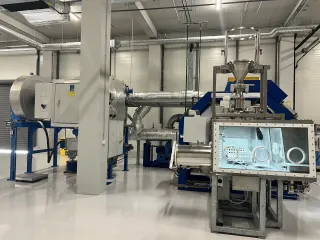
Deactivation furnace of lithium recycling pilot line. Photo courtesy of Sunlight Group
The Xanthi pilot plant also handles all major lithium-ion chemistries, including NMC and LTO (Lithium Titanate Oxide). The highly efficient recycling process and the ability to recycle multiple chemistries greatly improve the business case for commercially viable LFP recycling.
“ReLiFe proved that sustainable LFP battery recycling isn’t just a concept. It is scalable, economically viable, and ready to handle future waste streams,” said Dr Panagiotis Xanthopoulos, Project Coordinator and Recycling Expert at Sunlight Group.
The project brings Europe closer to a sustainable domestic supply chain for critical battery materials. “Recycling is Europe’s new ‘mine’,” said Dr Nikos Tsiouvaras, Chief Technology Officer at Sunlight Group. “It is the most responsible way to secure critical raw materials and strengthen our industrial autonomy.”
“At EIT RawMaterials, we are committed to strengthening Europe’s industrial resilience by securing a cost-efficient, sustainable, and independent raw materials supply. Advancing recycling capacity for LFP batteries is a critical step toward reducing reliance on primary resources and enabling a truly circular, competitive European battery value chain,” said Bernd Schäfer, CEO, Managing Director, EIT RawMaterials.
“We are glad to have supported the ReLiFe project, which has demonstrated how innovation, targeted investment, and strong pan-European partnerships can turn strategic priorities into industrial reality at speed,” he added.
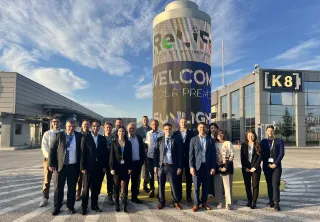
Group photo of the ReLiFe consortium at the project’s closing meeting. Photo courtesy of Sunlight Group
In addition to the EIT RawMaterials funding, the consortium partners invested a further €2 million of their own funds and shared their technologies with the consortium, demonstrating a strong commitment to scaling lithium battery recycling in Europe.
TU Bergakademie Freiberg, a renowned German university in end-of-life product recycling, the Helmholtz Institute Freiberg for Resource Technology, a leading German applied research centre for resource technology, and MONOLITHOS Catalysts & Recycling, a specialist in catalytic materials and recycling processes from Greece, contributed to the consortium’s technological development. Küttner GmbH & Co. KG, an established German multi-sector plant engineering company, supported the consortium with pilot plant design.
“The success of ReLiFe confirms the power of European cooperation,” said Dr Panagiotis Xanthopoulos at Sunlight. “Through joint action, we delivered a pilot recycling plant and laid the foundation for industrial-scale deployment in just three years.”
To ensure the commercial and environmental robustness of the recycling technology, Greenhouse Investment Group, an Irish financial consultancy, conducted the Market, Business Plan and Risk analyses, while SE&C, an independent research and innovation company in Greece that provides environmental inspections, performed the life cycle assessment.
Next, Sunlight Group will further refine the technology and carry out a techno-economic due diligence study to validate the pilot plant’s environmental and economic performance and prepare for a full-scale industrial lithium battery recycling facility. With the pilot plant and validated recovery process, ReLiFe has positioned Europe to reduce dependence on mining and build the circular battery economy needed for energy independence.
Find out more about the EIT RawMaterials KAVA Call.