Outside the tick-box: The DiliCHANCE project on the ground in Africa
Outside the tick-box: The DiliCHANCE project on the ground in Africa
An interview with Zenzi Awases, President of the Association of Women in Mining in Africa, partner of the DiliCHANCE project.
With the EIT RawMaterials-led DiliCHANCE project gaining momentum, we spoke to Zenzi Awases, President of the Association of Women in Mining in Africa (AWIMA), one of the project’s partners. She explained why AWIMA is involved in the project and why due diligence tools must reflect lived realities on the ground.
EIT RawMaterials: Can you tell us what AWIMA does and what its mission is?
AWIMA represents women in mining from 42 of the 54 African countries, across all five regions of the continent. Our members are leaders of national women-in-mining associations, collectively representing around 150,000 women across the mining value chain.
A large part of our membership is women in artisanal and small-scale mining (ASM). But we also represent women in large-scale mining: geologists, mining engineers, metallurgists, lawyers, etc., women entrepreneurs in mining supply chains, and youth and women from communities affected by mining.
Our mission is simple, but very powerful: we want to ensure that women are not just present in Africa’s mining value chain, but that they are able to participate meaningfully, benefit economically, and influence decision-making, because we see women as key actors in building a more ethical and sustainable mining sector.
EIT RawMaterials: Why is due diligence such an important topic for your organisation?
When companies combine clear standards with genuine engagement and support, responsible sourcing becomes not just a requirement, but a driver of resilience, stability and shared prosperity. And ultimately, that's what we want: shared prosperity.
But you need to start by listening before auditing, and you must engage suppliers and communities as partners, not just as risk points in your supply chain. You need to understand their realities, constraints and motivations.
Due diligence should not just be a tick-box exercise. It should be about a genuine connection with people on the ground, and those people can tell when due diligence is only being done to satisfy a requirement.
EIT RawMaterials: How and why did you get involved in the DiliCHANCE project?
This is actually our third major project with European partners. We previously worked on the AfricaMaVal project, where we led a work package focused on ESG and responsible value chains for critical raw materials.
Towards the end of that project, our partners introduced us to DiliCHANCE and, when I read the project’s objectives, I knew immediately that I wanted AWIMA to be involved.
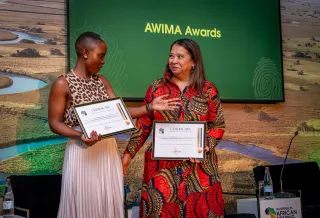
Finalists for the Leading Woman in Large Scale Mining Award at the 2026 Mining Indaba
The project sits exactly at the intersection of responsible sourcing, due diligence and inclusion, which are the issues our members deal with every day on the ground. Through our networks, we are able to bring community-level and grassroots perspectives into the project, which is why this collaboration felt both meaningful and useful to us.
EIT RawMaterials: What is AWIMA’s role in the project?
Our role is to connect the project to real actors. I sometimes read audit reports and ask myself: “Who exactly did you speak to to reach these conclusions?”
Africa is not one-size-fits-all. Mining in Namibia is completely different from mining in Nigeria or Malawi. We have been saying this for years, and our European partners are now saying the same.
So, when you are directly involved in a project that can influence the tools used for due diligence, you can bring real-life perspectives into the process. Our contribution is to connect the project to women miners, cooperatives, entrepreneurs and community groups across different countries.
We also bring practical insights into the barriers faced by ASM communities, including documentation gaps, limited access to digital tools and a lack of formal recognition. ASM is often labelled “illegal mining”, but most people working in ASM do not want to be illegal. Unless you understand why they are informal, you cannot design fair or effective due diligence requirements.
EIT RawMaterials: How can a tool like DiliCHANCE make due diligence easier or more effective?
Most companies genuinely want to do the right thing, but they struggle with complex standards, fragmented information and a limited understanding of local realities. That is where a tool like DiliCHANCE can be a real game-changer in how we approach responsible sourcing.
I grew up in a mining town on the west coast of Namibia, and I often say that I am a poster child for what ESG can look like when it is done correctly.
The mining company in my hometown understood that, if they were going to extract resources from the area, they had a responsibility to do right by the community.
If that approach were applied consistently and responsibly across the continent, mining could have a very different legacy. The challenge today is ensuring that these principles are embedded from the start and that they remain in place long after a project begins.
Tools like DiliCHANCE can help make that possible by grounding due diligence in real experiences, trust and long-term commitment.
About DiliCHANCE
DiliCHANCE provides a range of web-based tools to strengthen responsible sourcing across mineral supply chains. This includes a self-check tool, due to launch in April 2026, which will help companies assess current due diligence practices and access tailored learning materials to address identified gaps.